
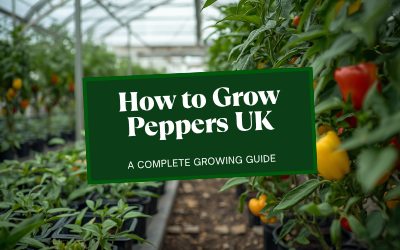
Peppers need a long, warm UK season: sow indoors in February or March at 18–21°C, pot on as they grow, and move plants to a greenhouse or sheltered sunny spot after the last frost in late May. Harvest fruits green or fully coloured from July to October.
A quick SoilCommander video on growing peppers at home in UK conditions — sowing, spacing, care and harvest in under a minute.
Not sure when to sow? See our When to Plant Peppers UK →
Sowing dates and growing advice verified against RHS guidance by the SoilCommander Growing Team.
Part of the UK Vegetable Growing Guides — how-to-grow guides for every crop.
| Task | Timing | Notes |
|---|---|---|
| Sow indoors | February – March | Heated propagator, 18–21°C; germination up to 21 days |
| Plant out | Late May – mid June | Only in warmest, sheltered southern spots outdoors — greenhouse elsewhere |
| Harvest | July – October | Pick green or fully coloured; pick regularly to keep plants fruiting |
When to Sow Peppers
- Indoor sowing: February–April in a heated propagator or warm windowsill
- Chillies: Sow in February — they need an even longer season
- Outdoor growing: Only in the warmest, most sheltered locations in the south
Recommended Varieties
- Mohawk F1 — early and reliable, good for shorter greenhouse seasons
- Gypsy F1 — very productive, sweet pointed fruits
- Apache (chilli) — compact, very productive, medium heat
- Jalapeno (chilli) — classic medium-heat, dependable cropper
Sweet peppers and chillies are the same species. The heat comes entirely from capsaicin levels. Consistent watering actually makes chillies slightly milder.
Common Mistakes to Avoid
- Sowing without enough heat. Peppers need 18–21°C to germinate reliably — cooler conditions simply delay growth, sometimes for weeks.
- Letting plants dry out at flowering. Flower buds can drop if plants get too dry, but overwatering in containers causes its own problems — aim for even moisture.
- Growing in pots under 30cm wide. Cramped roots restrict growth and cut yields — give peppers a generous container from the start.
- Skipping greenhouse humidity. Peppers need high humidity to fruit well — damping down the greenhouse floor helps set fruit that dry air would otherwise prevent.
Frequently Asked Questions
Can I grow peppers outdoors in the UK?
Only in very warm, sheltered spots with reliable overnight temperatures above 15°C — most UK growers get far better, more reliable results in a greenhouse.
How long do peppers take to crop from sowing?
Around 20–30 weeks from sowing to first harvest — greenhouse plants start fruiting by mid-summer, outdoor plants typically from August.
Do all pepper varieties suit UK growing conditions?
No — compact varieties like 'Redskin' suit containers and shorter seasons, while larger varieties need greenhouse space and a longer growing season to crop well.
Plan Your Vegetable Garden
Month-by-month sowing and harvest schedules for every crop.
Get the UK Garden Planner →Browse all sowing dates: UK vegetable planting calendar · All guides: UK vegetable growing guides
Last updated 4 July 2026
Tools That Help With This Crop
Use these links when the guide moves from reading into sowing, planting, watering, and keeping the crop healthy.
Plan the next step
Use the printable UK Vegetable Garden Planner to turn this guide into sowing dates, bed layouts, and weekly garden tasks.