

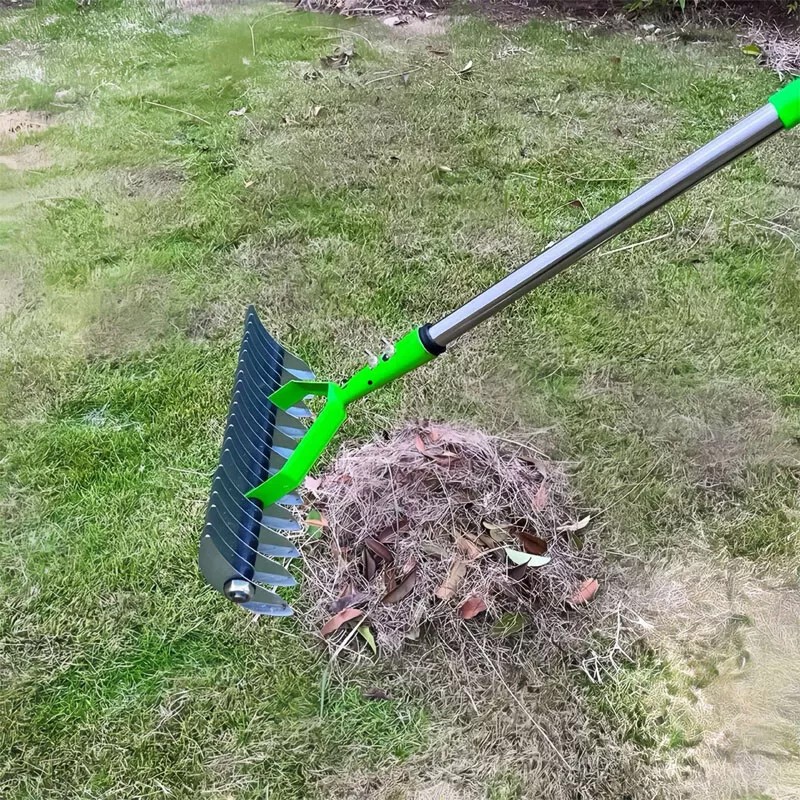
Adjustable Lawn Dethatcher Rake in Stainless Steel
Grass rake
£34.99
Sale price
£34.99
Regular price
£49.99
Skip to product information

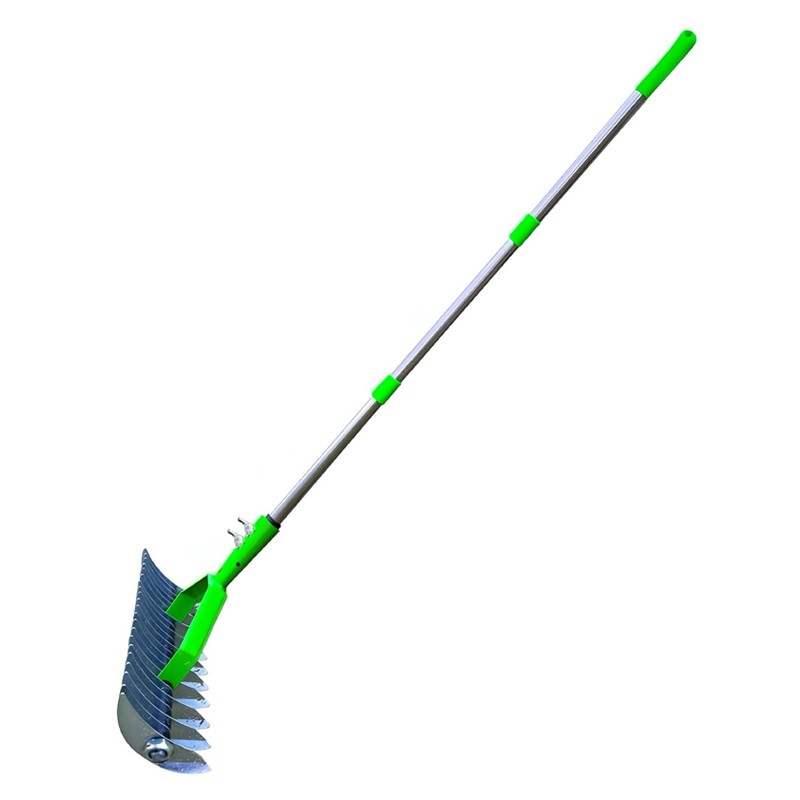
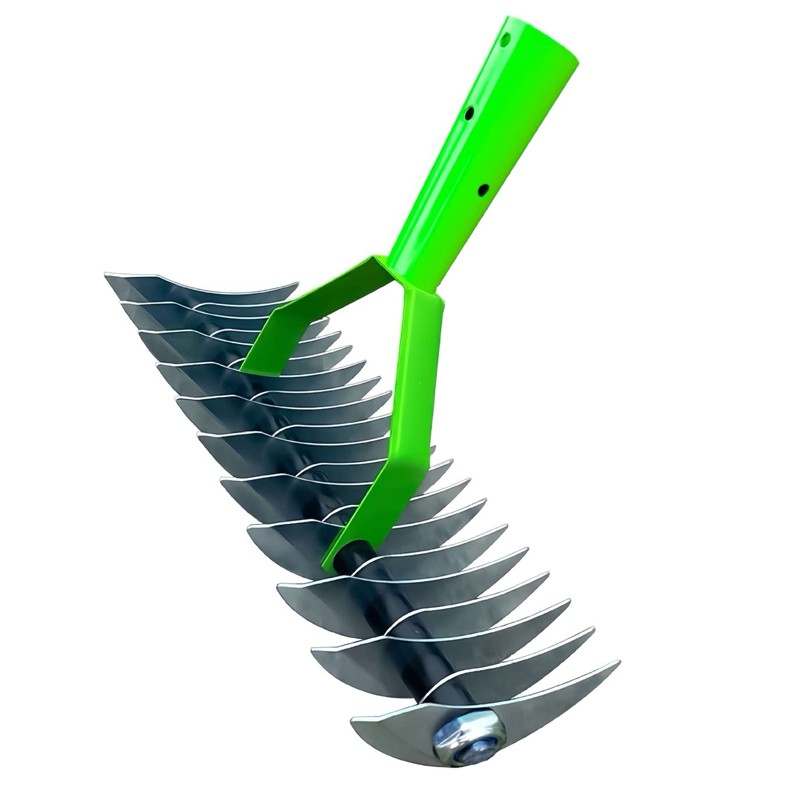
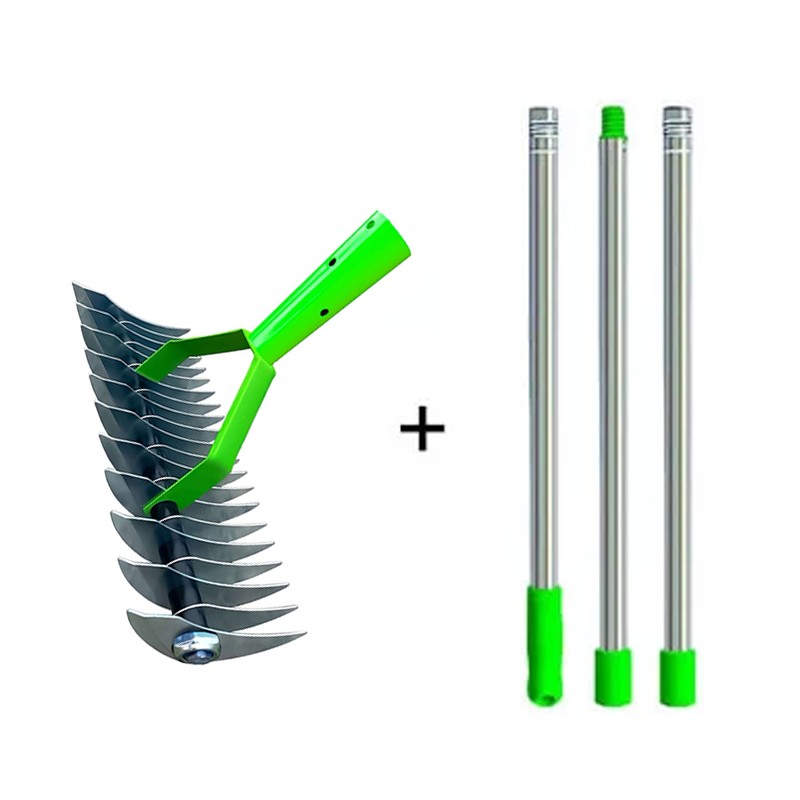
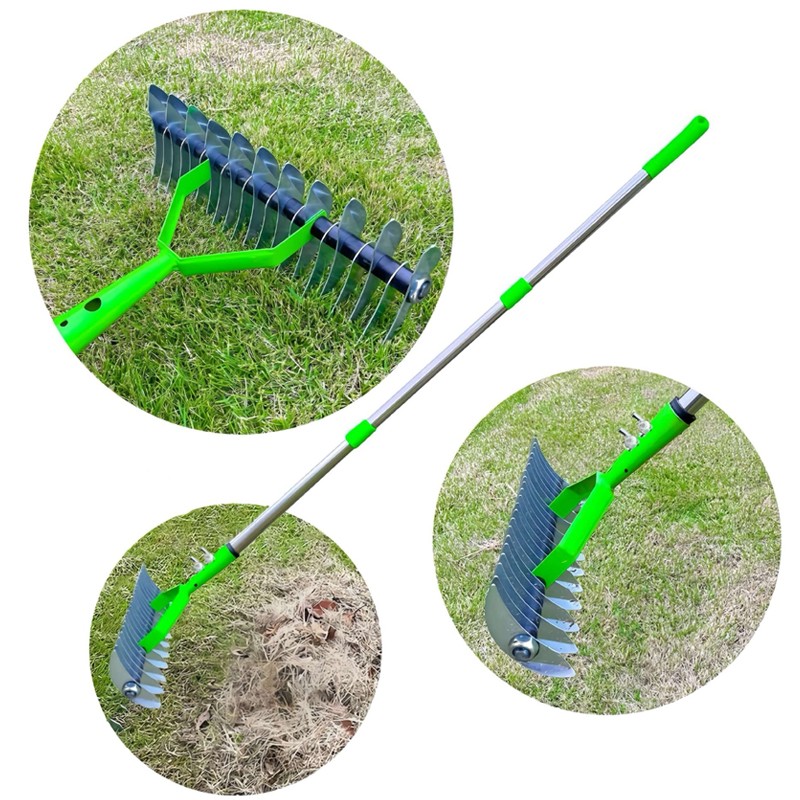


Adjustable Lawn Dethatcher Rake in Stainless Steel
£34.99
Sale price
£34.99
Regular price
£49.99
Watching your carefully tended grass struggle to thrive beneath a layer of suffocating debris can be deeply frustrating. Every gardener knows the challenge of maintaining that perfect green carpet when moss and dead clippings block essential nutrients from reaching the soil.
The Smarter Way to Revive Your Lawn
Our double-sided lawn dethatcher rake effortlessly pulls away the dense undergrowth, breathing fresh life back into your garden. With every sweep, you clear the path for water, air, and sunlight to penetrate deep into the roots, transforming a tired yard into a vibrant, lush landscape.
Key Benefits
- 🌿 Cuts through dense surface buildup with precision-curved stainless steel teeth to instantly clear your turf
- 🔄 Flips over to a straight-edge side designed for breaking up compacted topsoil and preparing beds for seeding
- 💪 Reduces back strain during long gardening sessions thanks to the fully adjustable ergonomic handle length
- 🌱 Glides smoothly over healthy grass blades without tearing them, ensuring only the dead material is removed
- 📏 Adapts to different users with interchangeable pole sections to find your perfect working height
- 🌧️ Resists rust and weathering even if accidentally left out in the rain, ensuring reliable multi-season use
- 💧 Accelerates the absorption of liquid fertilizers by opening up clear pathways directly to the root zone
- ⚡ Provides a lightweight but heavy-duty alternative to bulky electric scarifiers that can tear up delicate lawns
Who It's For
This tool is designed for dedicated home gardeners and lawn enthusiasts who take deep pride in their outdoor spaces. It is also an ideal companion for allotment holders looking to maintain pristine paths and well-aerated soil without relying on heavy machinery.
Usage Tips
- Mow your grass slightly shorter than usual before using the rake to make debris removal smoother and more effective.
- Wait for a dry day when the soil is slightly damp but the grass blades are dry to prevent the teeth from clogging.
- Use short, firm pulling motions rather than long sweeping strokes to maintain better control and protect healthy shoots.
- Pass over heavily congested areas in a crisscross pattern to ensure maximum removal of moss and dead material.
- Collect the raked organic matter to add to your compost bin, as it makes an excellent nitrogen-rich addition.
Frequently Asked Questions
How often should I dethatch my garden?
For most lawns, once or twice a year is sufficient — typically in spring and early autumn. If your thatch layer exceeds half an inch, more frequent sessions may be needed to keep the lawn breathing freely.
Is spring or autumn the best time to use this tool?
Both seasons work well. Spring dethatching removes winter buildup before the growing season begins, while autumn sessions clear matted leaves and dead material before the lawn goes dormant. Choose based on when your lawn looks most congested.
Will this pull up healthy grass along with the dead material?
No — the curved tines are designed to target the thatch layer just above the soil surface. When used with short, controlled strokes, healthy grass blades are left intact while only dead material and moss are removed.
Can I use the straight edge for leveling gravel or soil?
Yes. The flat reverse side works well for spreading and leveling loose materials like gravel, compost, or topsoil, making it a versatile two-in-one tool for general garden bed preparation.
Do I need to apply fertilizer immediately after clearing the lawn?
It is highly recommended. Dethatching opens up the soil surface, making it the ideal moment to apply fertilizer or overseeding. Nutrients and seeds can now reach the root zone far more effectively than on an untreated lawn.
How do I know if my yard actually needs dethatching?
Push your finger into the grass — if you feel a spongy layer more than half an inch thick before reaching soil, your lawn has excess thatch. You may also notice water pooling on the surface or grass looking dull despite regular watering.
Is the handle comfortable to use without wearing garden gloves?
The handle is smooth and designed for extended use, but gloves are always recommended for any raking task to prevent blisters during longer sessions. The adjustable length also helps reduce grip fatigue.
Can this tool help prepare a bare patch for new grass seed?
Absolutely. Use the curved side to loosen the top layer of compacted soil, then flip to the straight edge to level the surface before broadcasting seed. This creates ideal seed-to-soil contact for faster germination.
What is the best way to clean the tines after a long session?
Rinse the tine head with a garden hose immediately after use to prevent debris from drying and hardening between the teeth. For stubborn buildup, a stiff brush works well. The stainless steel construction means no oiling is required.
Will regular use help reduce the appearance of broadleaf weeds?
Regular dethatching disrupts the surface conditions that allow weed seeds to germinate and establish. Combined with overseeding after each session, a dense, healthy lawn naturally crowds out broadleaf weeds over time.
Did You Know?
Just half an inch of thatch can act like a waterproof blanket, preventing up to 50% of rainwater from ever reaching your grass roots. Regular raking not only improves appearance — it actually trains your grass to grow deeper, more drought-resistant root systems.
You may also like


Sale
1.3m Solar Lamp Post Set (2 Pcs) - Outdoor Pathway Lighting
1.3m Solar Lamp Post Set (2 Pcs) - Outdoor Pathway Lighting
£59.99
Sale price
£59.99
Regular price
£99.99


Sale
100ft Flexible Stainless Steel Garden Hose with 10-Pattern Spray Nozzles
100ft Flexible Stainless Steel Garden Hose with 10-Pattern Spray Nozzles
£111.00
Sale price
£111.00
Regular price
£199.00


Sale
106 LED Solar Motion Sensor Flood Light
106 LED Solar Motion Sensor Flood Light
£39.99
Sale price
£39.99
Regular price
£54.99


