
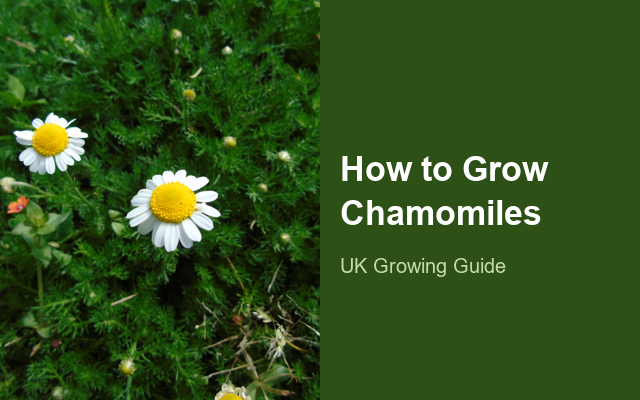
Chamomile (Chamaemelum nobile)

1 sources cited · Verified
Chamomiles (Chamaemelum nobile) — perennial.
Unlike an annual crop, the work here is front-loaded into establishment: get the planting and the site right and the same plants crop for several seasons.
Core growing advice on this page is checked against named horticultural and university-extension sources — see References.
Soil & Growing Conditions

Growth Stages

Quick Facts
Harvest & Storage

Chamomile, a Mat-Forming Perennial Herb

References
-
A mat-forming herbaceous perennial with finely divided, aromatic foliage and white, yellow-centred daisy-like flowers 1.5cm across. Native to Western Europe and Northwest Africa, including Great Britain and Ireland. Hardiness H7 (hardy in the severest European continental climates, below -20C). Full sun or partial shade. Soil: chalk, loam or sand; well-drained; acid, alkaline or neutral pH. Height and spread 0.1-0.5m. Time to maturity 2-5 years. Propagated by seed or division (division for non-flowering cultivars). Generally pest-free and generally disease-free. Aromatic leaves used as a culinary herb for tea and traditional herbal preparations; flowers are the part traditionally dried for chamomile tea. Regular trimming maintains compact, bushy growth.
1 independent sources are cited for this crop. Where they disagree - soil pH is the clearest case - every figure is preserved rather than averaged into false precision.
Frequently Asked Questions
What soil pH do chamomiles need?
A pH of about 6–7.5. That span reflects genuine variation between the authorities we cite rather than a single agreed figure — the References section lists each source's exact range.
Plan next season before the problems start
This page gives you the thresholds; the planner turns them into your own calendar. It works from what you can observe and measure in your garden rather than from dates written for somebody else’s latitude.
Get the Global Garden Planner →Instant PDF download · Works in either hemisphere
Last verified 2026-08-29
Where To Go From Here
Take this crop from reading into a written plan for your own beds.
Plan the next step
Use the printable SoilCommander planner for your region to turn this guide into sowing dates, bed layouts and weekly garden tasks.