How to Grow

How to Grow Raspberries USA | Planting & Establishment

Move through the SoilCommander growing library like a course: keep the navigation in place, open the next lesson, and build your garden plan step by step.

How to Grow Raspberries USA | Planting & Establishment guide thumbnail

Raspberry (Rubus idaeus)

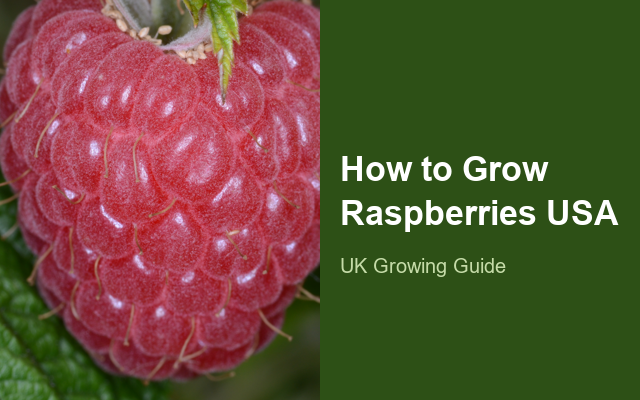
Close-up macro of a ripe raspberry — “Himbeere 8644” by Amada44 is licensed under CC BY 4.0. Source: Wikimedia Commons

9 sources cited · Verified

The short answer

Site
soil pH 6–6.7
Biggest risk
Raspberry cane blight

Raspberries (Rubus idaeus) — perennial (biennial canes).

Unlike an annual crop, the work here is front-loaded into establishment: get the planting and the site right and the same plants crop for several seasons.

Core growing advice on this page is checked against named horticultural and university-extension sources — see References.

Soil & Growing Conditions

The green topside of a raspberry leaf — “Himbeere Rubus idaeus 'Aroma Queen' top 20210718 01” by NobbiP is licensed under CC BY-SA 3.0. Source: Wikimedia Commons
Himbeere Rubus idaeus 'Aroma Queen' top 20210718 01” by NobbiP is licensed under CC BY-SA 3.0. Source: Wikimedia Commons.

Water: regular watering during dry spells, especially while fruiting; mulch to retain moisture

Soil pH range

6 6.7

Span reflects genuine variation between the cited authorities, not a single agreed figure.

Growth Stages

Ripe and unripe raspberries on the same stem — “Lamponi” by Albarubescens is licensed under CC BY-SA 4.0. Source: Wikimedia Commons
Lamponi” by Albarubescens is licensed under CC BY-SA 4.0. Source: Wikimedia Commons.
Stage BBCH Notes
Planting and propagation 0 Propagated from disease-free stock by cuttings, division or layering; trained in rows using support wires (RHS).
Cane establishment 3 New canes establish, mulched with acidic material such as composted bark (RHS).
Flowering and fruiting 6 Produces edible red fruits on canes; summer types fruit on year-old wood, autumn types on new growth.
Post-harvest cane management 9 Fruited canes are removed after harvest to make way for new growth, over a 2-5 year maturation cycle (RHS).

Quick Facts

Close-up macro of a ripe raspberry — “Himbeere 8644” by Amada44 is licensed under CC BY 4.0. Source: Wikimedia Commons
Himbeere 8644” by Amada44 is licensed under CC BY 4.0. Source: Wikimedia Commons.
Factor Value
Soil pH 6 - 6.7
Drainage well-drained, moisture-retentive; intolerant of waterlogging (root rot risk)
Lifecycle perennial (biennial canes)
Edible parts fruit

At a Glance

A fruiting raspberry cane in habitat — “2018-06-18 (102) Rubus idaeus (raspberry) at Bichlhäusl in Frankenfels, Austria” by GT1976 is licensed under CC BY-SA 4.0. Source: Wikimedia Commons
2018-06-18 (102) Rubus idaeus (raspberry) at Bichlhäusl in Frankenfels, Austria” by GT1976 is licensed under CC BY-SA 4.0. Source: Wikimedia Commons.
Rubus idaeus Raspberry Raspberry cane blight Grey mould Honey fungus Aphids Gall mites Raspberry beetle DISEASES PESTS

Harvest & Storage

Close-up macro of a ripe raspberry — “Himbeere 8644” by Amada44 is licensed under CC BY 4.0. Source: Wikimedia Commons
Himbeere 8644” by Amada44 is licensed under CC BY 4.0. Source: Wikimedia Commons.

When to pick: Fruit fully coloured and easily detaches from the plug when ripe; harvest June to October depending on variety (summer- vs autumn-fruiting types); pick on a dry day.

Storage

best eaten fresh; open-freeze on a tray then bag for longer storage

Diseases

The pale underside of a raspberry leaf — “Himbeere Rubus idaeus 'Aroma Queen' bottom 20210718 02” by NobbiP is licensed under CC BY-SA 3.0. Source: Wikimedia Commons
Himbeere Rubus idaeus 'Aroma Queen' bottom 20210718 02” by NobbiP is licensed under CC BY-SA 3.0. Source: Wikimedia Commons.
Raspberry cane blight

Paraconiothyrium fuckelii

RHS: "Raspberry cane blight is a common and serious fungal disease of raspberries."

Fuzzy grey-brown Botrytis mould covering a tomato stem — Rasbak, CC BY-SA 3.0
Rasbak, CC BY-SA 3.0
Grey mould
low

Botrytis cinerea

Soft brown fruit decay; Fuzzy grey-brown mould

RHS names this directly.

Honey fungus
low

Armillaria spp.

RHS names this directly.

Pests

The green topside of a raspberry leaf — “Himbeere Rubus idaeus 'Aroma Queen' top 20210718 01” by NobbiP is licensed under CC BY-SA 3.0. Source: Wikimedia Commons
Himbeere Rubus idaeus 'Aroma Queen' top 20210718 01” by NobbiP is licensed under CC BY-SA 3.0. Source: Wikimedia Commons.
low

Aphididae (various spp.)

RHS names this directly.

Gall mites
low

Eriophyidae

RHS names this directly.

Raspberry beetle

Byturus tomentosus

RHS: "Plants affected: Raspberry, blackberry, tayberry, loganberry." Raspberry named as the primary host.

References

  1. country=International

  2. country=US

  3. country=US

  4. A cane fruit shrub producing edible red fruits; native to Great Britain and Ireland, and the parent of all cultivated raspberries; has potential to become invasive without proper management. Hardiness H6 (thrives throughout the UK and northern Europe, even during severe winters). Full sun (tolerates light shade, with a smaller crop). Soil: loam or sand; moist but well-drained; acidic or neutral pH; mulch with acidic material such as composted bark; trained in rows using wires for support. Height 1.5-2.5m, spread 0.5-1m. Time to maturity 2-5 years. Propagated by softwood/semi-ripe cuttings (spring to midsummer), hardwood cuttings (winter), root cuttings (autumn/winter), leaf bud cuttings (mid-late summer), division, or layering (late summer to early spring) -- choose disease-free stock. Pests: aphids, leafhoppers, raspberry beetle, gall mites (also raspberry leaf and bud mite, glasshouse red spider mite). Diseases: grey moulds, raspberry cane spot, fungal leaf spot, raspberry cane blight, viruses, honey fungus (rarely).

  5. country=International

  6. country=UK

  7. country=UK

  8. country=UK

  9. country=International

9 independent sources are cited for this crop. Where they disagree - soil pH is the clearest case - every figure is preserved rather than averaged into false precision.

Frequently Asked Questions

What soil pH do raspberries need?

A pH of about 6–6.7. That span reflects genuine variation between the authorities we cite rather than a single agreed figure — the References section lists each source's exact range.

What problems affect raspberries?

Our data links 3 diseases and 3 pests to this crop. See the sections above for each one and how to manage it.

Plan next season before the problems start

Almost everything on this page resolves to your own frost dates rather than the calendar — the last spring frost moves by roughly two months between zone 3 and zone 10. The USA Garden Planner works from your zone so the timing is already decided before the season starts.

Get the USA Garden Planner →

Instant PDF download · Written for US growing conditions

SoilCommander Editorial Team

US vegetable growing guides · Checked against USDA & Cooperative Extension guidance

Every SoilCommander guide is written and maintained by our editorial team for real US growing conditions, and checked against USDA hardiness and frost-date data and Cooperative Extension growing advice before publication.

Vegetable Growing Guides USA

Last verified 2026-08-29

Relevant next steps

Where To Go From Here

Take this crop from reading into a written plan for your own beds.

Free Tool
soilcommander.com/pages/garden-planner
1 · Shape
2 · Crops
3 · Conditions
4 · Plan
Choose your garden shape
🍅
Bed 1
Tomatoes
🍌
Bed 2
Legumes
🥦
Bed 3
Brassicas
🥕
Bed 4
Roots
🥥
Bed 5
Alliums
🌿
Herbs & More

Free planning tool

Plan your veg garden before you dig a single inch

Sketch your exact plot shape, pick your crops, and get a spacing-accurate bed layout with companion pairings and a rotation plan. Spacing, companion pairings and rotation work the same in any climate — pair the layout it gives you with the USA planting calendar for your own frost-date timing.

Garden Layout Planner Tool

Free to use. Nothing to install.

Plan the next step

Use the printable SoilCommander planner for your region to turn this guide into sowing dates, bed layouts and weekly garden tasks.

Get Planner