How to Grow

How to Grow Tarragons | Planting & Establishment

Move through the SoilCommander growing library like a course: keep the navigation in place, open the next lesson, and build your garden plan step by step.

How to Grow Tarragons | Planting & Establishment guide thumbnail

Tarragon (Artemisia dracunculus)

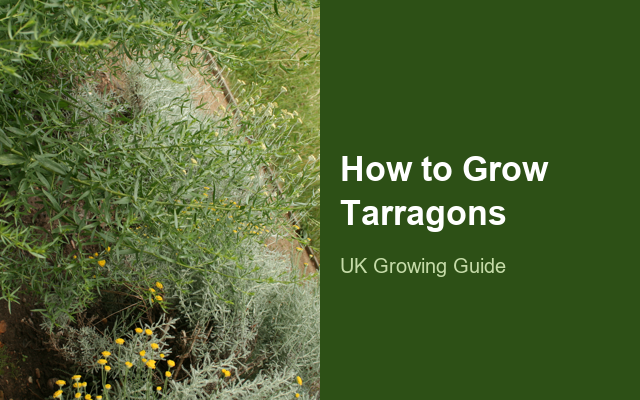
A bushy tarragon shrub — “Artemisia dracunculus Bylica estragon 2021-04-27 01” by Agnieszka Kwiecień, Nova is licensed under CC BY-SA 4.0. Source: Wikimedia Commons

7 sources cited · Verified

The short answer

Ready in
42–56 days
Site
soil pH 6.5–7
Biggest risk
Honey fungus

In the UK, tarragons are ready to harvest 42–56 days after planting.

Tarragons (Artemisia dracunculus) — perennial.

Unlike an annual crop, the work here is front-loaded into establishment: get the planting and the site right and the same plants crop for several seasons.

Core growing advice on this page is checked against named horticultural and university-extension sources — see References.

Soil & Growing Conditions

Tarragon growing in its natural habitat by a lake — “Artemisia dracunculus 1” by Thayne Tuason is licensed under CC BY-SA 4.0. Source: Wikimedia Commons
Artemisia dracunculus 1” by Thayne Tuason is licensed under CC BY-SA 4.0. Source: Wikimedia Commons.

Soil pH range

6.5 7

Span reflects genuine variation between the cited authorities, not a single agreed figure.

Growth Stages

A bushy tarragon shrub — “Artemisia dracunculus Bylica estragon 2021-04-27 01” by Agnieszka Kwiecień, Nova is licensed under CC BY-SA 4.0. Source: Wikimedia Commons
Artemisia dracunculus Bylica estragon 2021-04-27 01” by Agnieszka Kwiecień, Nova is licensed under CC BY-SA 4.0. Source: Wikimedia Commons.
Stage BBCH Notes
Propagation 0 Propagate Russian tarragon by seed, French tarragon by semi-hardwood cuttings or division in late summer (RHS).
Establishment 3 Establishes as an upright, columnar perennial in full sun on well-drained soil, sheltered from wet winters (RHS).
Basal pruning 6 Cut back to new basal shoots in mid to late spring to maintain vigour (RHS).
Mature clump 9 Reaches full maturity over 2-5 years, 0.5-1m in height, 0.1-0.5m spread (RHS).

Quick Facts

Close-up of narrow tarragon leaves — “Artemisia dracunculus - Botanischer Garten Mainz IMG 5516” by Oceancetaceen - Alice Chodura is licensed under CC BY-SA 3.0. Source: Wikimedia Commons
Artemisia dracunculus - Botanischer Garten Mainz IMG 5516” by Oceancetaceen - Alice Chodura is licensed under CC BY-SA 3.0. Source: Wikimedia Commons.
Factor Value
Soil pH 6.5 - 7
Optimal growing temp 12-22C
Minimum survivable temp -15C
Time to harvest 42-56 days
Drainage Free-draining
Lifecycle perennial
Edible parts leaves

At a Glance

A bushy tarragon shrub — “Artemisia dracunculus Bylica estragon 2021-04-27 01” by Agnieszka Kwiecień, Nova is licensed under CC BY-SA 4.0. Source: Wikimedia Commons
Artemisia dracunculus Bylica estragon 2021-04-27 01” by Agnieszka Kwiecień, Nova is licensed under CC BY-SA 4.0. Source: Wikimedia Commons.
Artemisia dracunculus Tarragon Honey fungus Powdery mildew Tarragon rust DISEASES

Harvest & Storage

Close-up of narrow tarragon leaves — “Artemisia dracunculus - Botanischer Garten Mainz IMG 5516” by Oceancetaceen - Alice Chodura is licensed under CC BY-SA 3.0. Source: Wikimedia Commons
Artemisia dracunculus - Botanischer Garten Mainz IMG 5516” by Oceancetaceen - Alice Chodura is licensed under CC BY-SA 3.0. Source: Wikimedia Commons.

When to pick: RHS: harvest leaves "when new growth starts in spring and continue into autumn"; pick from shoot tips regularly to encourage fresh growth, using young leaves for best flavour. USU: for drying, "the first harvest is 6 to 8 weeks after growth has begun"; sprigs harvested as needed through the season, each about one-third the stem length; for drying, harvest before the first fall frost.

Storage

Best used fresh; can be dried for longer storage

Diseases

Tarragon seedheads on flowering stems — “Artemisia dracunculus estragon” by Pau Pámies Grácia is licensed under CC BY-SA 4.0. Source: Wikimedia Commons
Artemisia dracunculus estragon” by Pau Pámies Grácia is licensed under CC BY-SA 4.0. Source: Wikimedia Commons.
Honey fungus

Armillaria spp.

RHS Artemisia dracunculus plant page: "May be susceptible to honey fungus".

RHS names this directly.

Tarragon rust
low

RHS names this directly.

References

  1. country=INTL

  2. country=INTL

  3. country=UK

  4. country=UK

  5. country=UK

  6. country=UK

  7. country=USA

7 independent sources are cited for this crop. Where they disagree - soil pH is the clearest case - every figure is preserved rather than averaged into false precision.

Frequently Asked Questions

How long do tarragons take to grow?

Typically 42–56 days, depending on cultivar and growing conditions.

What soil pH do tarragons need?

A pH of about 6.5–7. That span reflects genuine variation between the authorities we cite rather than a single agreed figure — the References section lists each source's exact range.

What problems affect tarragons?

Our data links 3 diseases to this crop. See the sections above for each one and how to manage it.

Plan next season before the problems start

This page gives you the thresholds; the planner turns them into your own calendar. It works from what you can observe and measure in your garden rather than from dates written for somebody else’s latitude.

Get the Global Garden Planner →

Instant PDF download · Works in either hemisphere

SoilCommander Editorial Team

Science-based growing guides · Thresholds that hold in any climate

This guide states the conditions the plant itself responds to — soil temperature, frost tolerance, day length — rather than dates, because the same calendar month means opposite seasons in the northern and southern hemispheres. Anything genuinely restricted to one part of the world is named as such rather than presented as universal. Written and maintained by our editorial team against international horticultural research and extension sources.

Vegetable Growing Guides

Last verified 2026-08-29

Relevant next steps

Where To Go From Here

Take this crop from reading into a written plan for your own beds.

Free Tool
soilcommander.com/pages/garden-planner
1 · Shape
2 · Crops
3 · Conditions
4 · Plan
Choose your garden shape
🍅
Bed 1
Tomatoes
🍌
Bed 2
Legumes
🥦
Bed 3
Brassicas
🥕
Bed 4
Roots
🥥
Bed 5
Alliums
🌿
Herbs & More

Free planning tool

Plan your veg garden before you dig a single inch

Sketch your exact plot shape, pick your crops, and get a spacing-accurate bed layout with companion pairings and a rotation plan. Spacing, companion pairings and rotation are the same in every climate and both hemispheres — pair the layout it gives you with when to plant to set your own timing from soil temperature.

Garden Layout Planner Tool

Free to use. Nothing to install.

Plan the next step

Use the printable SoilCommander planner for your region to turn this guide into sowing dates, bed layouts and weekly garden tasks.

Get Planner