
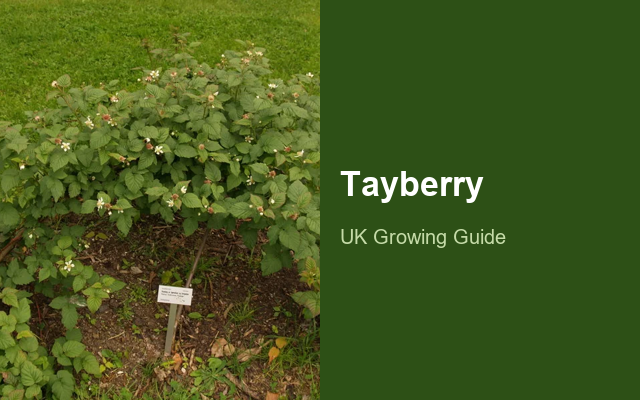
Tayberry (Rubus fruticosus x idaeus)

2 sources cited · Verified
The short answer
- Site
- 6+ hours of sun, soil pH 6–7
- Biggest risk
- Grey mould
Tayberries (Rubus fruticosus x idaeus) — Deciduous shrub with biennial canes, often thornless or lightly prickled (RHS.
2 diseases and 5 pests are documented for this crop, so a fair share of growing it well is prevention.
Core growing advice on this page is checked against named horticultural sources — see References.
Diseases

Pests


Quick Facts
At a Glance

Soil & Growing Conditions
Growth Stages

Harvest & Storage

Tayberry, a Sweeter Cross Between Raspberry and Blackberry
References
-
Tayberry: raspberry x blackberry cross, red fruit usually longer than a raspberry, sharper than raspberry but usually sweeter than loganberry, best for jams/cooking or fresh, harvest July-August. Recommended variety 'Tayberry' AGM: vigorous hybrid, large sweet fruit, canes often thornless. General hybrid-berry guidance: sunny sheltered site (fruits in light shade too), fertile well-drained soil avoiding winter waterlogging. Plant mid-autumn to early spring, spacing 2.5-4m depending on vigour. Horizontal wires 45cm apart, lowest wire 45cm above ground. Prune old fruited canes to base after summer/autumn harvest; first-year canes cut back to healthy buds 20-25cm from ground after planting. Pests: grey mould, raspberry viruses, aphids, raspberry beetle, spider mites, birds (netting needed). Propagation: stem-tip layering mid-late spring.
-
Bred in Scotland in the 1970s by Derek Jennings, crossing European blackberry with red raspberry. Popular in Europe and North America since introduction. Hardy USDA zone 5 (-20F/-29C). Cool-temperate preference; afternoon shade recommended in warmer areas to prevent overheating. Soil: well-drained, fertile, slightly acidic to neutral, organic-matter-rich; amend heavy clay or use raised beds. Full sun, 6-8hrs/day for best fruiting. Size 5-8ft, arching canes, thornless or lightly prickled. Propagation: mainly cuttings; seed needs stratification. Pests: aphids, spider mites, fruit flies -- treat with neem oil/insecticidal soap. Diseases: powdery mildew, botrytis blight, rust -- prevent via pruning for airflow and avoiding overhead watering. Harvest mid-summer (June-July), pick fully ripe on dry days.
2 independent sources are cited for this crop. Where they disagree - soil pH is the clearest case - every figure is preserved rather than averaged into false precision.
Frequently Asked Questions
What soil pH do tayberries need?
A pH of about 6–7. That span reflects genuine variation between the authorities we cite rather than a single agreed figure — the References section lists each source's exact range.
What problems affect tayberries?
Our data links 2 diseases and 5 pests to this crop. See the sections above for each one and how to manage it.
Plan next season before the problems start
Almost everything on this page resolves to your own frost dates rather than the calendar — the last spring frost moves by roughly two months between zone 3 and zone 10. The USA Garden Planner works from your zone so the timing is already decided before the season starts.
Get the USA Garden Planner →Instant PDF download · Written for US growing conditions
Last verified 2026-09-03
Where To Go From Here
Take this crop from reading into a written plan for your own beds.
Plan the next step
Use the printable SoilCommander planner for your region to turn this guide into sowing dates, bed layouts and weekly garden tasks.