
Brussels sprouts (Brassica oleracea Gemmifera Group)

3 sources cited · Verified
The short answer
- Sow
- Early March to late April
- Plant out
- Early May to mid June
- Ready in
- 80–100 days
- Site
- 6+ hours of sun, soil pH 6.5–7
- Biggest risk
- Club root
In the UK, brussels sprouts are sown early March to late April, planted out early May to mid June, and are ready to harvest 80–100 days after sowing.
Brussels sprouts (Brassica oleracea Gemmifera Group) — biennial (requires two growing seasons, but treated as an annual).
Core growing advice on this page is checked against named horticultural and university-extension sources — see References.
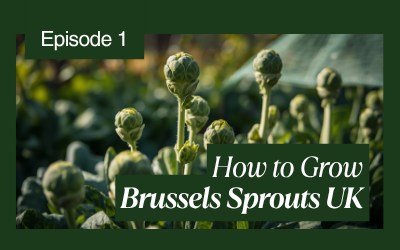
Watch: Growing Brussels Sprouts at Home
SoilCommander's step-by-step video guide to growing Brussels sprouts in UK conditions — sowing, planting out, care through the season and harvesting.
A quick 60-second SoilCommander short on growing Brussels sprouts in a UK garden — the essentials at a glance.
Soil & Growing Conditions

Quick Facts
| Factor | Value |
|---|---|
| Soil pH | 6.5 - 7 |
| Sunlight | 6-10 hours direct sun |
| Optimal growing temp | 12-20C |
| Minimum survivable temp | -5C |
| Time to harvest | 80-100 days |
| Soil texture | RHS: "fertile, well-drained, firm soil". Firmness matters because the plants are top-heavy. |
| Drainage | RHS: well-drained; a "sunny location". RHS advises raising the pH to at least 6.5 to deter club root; no upper bound is stated. |
| Lifecycle | biennial (requires two growing seasons, but treated as an annual) |
| Edible parts | sprouts, young leaves (sprout tops) |
At a Glance
Regional Planting Calendar
| Region | Sow | Plant out |
|---|---|---|
| Southern England | early March to late April | early May to mid June |
| Midlands derived | early March to early May | early May to late June |
| Northern England | mid March to mid May | mid May to late June |
| Scotland | mid March to mid May | mid May to late June |
Rows marked derived are interpolated between regions our sources do state, because no source we consulted gives a figure for that region specifically. They are deliberately wider to reflect that uncertainty.
Southern England - detail & sources
RHS: sow outdoors March to May (or February-April indoors in modules), planting out in late spring or early summer once seedlings are 10-15cm tall, spaced 60cm apart. Southern England has the UK's earliest soil-warming and last-frost dates per Met Office, so the earliest end of this window applies here.
Midlands - detail & sources
DERIVED: interpolated about a week later than southern England, following RHS's March-May sowing method and the Met Office's documented south-to-north soil-warming/frost gradient.
Northern England - detail & sources
RHS: sow outdoors March to May, planting out late spring/early summer. Met Office notes soil-warming and last-frost dates extend later further north, so a later start within the RHS window applies here.
Scotland - detail & sources
RHS: sow outdoors March to May, planting out late spring/early summer. Scotland gets the UK's latest soil-warming per Met Office, so a later start within the RHS window applies here.
Growth Stages
| Stage | BBCH | Notes |
|---|---|---|
| Germination & seedling | 0 | Sprouts are raised from seed sown about 1–2cm deep in spring, usually in a seedbed or modules rather than sown where they crop (RHS: sow March–April). Seed germinates in about a week in warm soil; grow plants on to sturdy young transplants of roughly 10–15cm with several true leaves before moving them. Harden off module-raised plants first. |
| Vegetative growth (transplanting & leafing) | 3 | Transplant from late spring into very firm, fertile soil, spacing plants about 60cm apart each way (RHS) — roughly 24–30in (Univ. of Maryland) — to give these big plants room. Firm the soil hard around each plant: loose ground produces loose, 'blown' sprouts. Water in well, keep weed-free, feed for strong leafy growth, and net against pigeons and cabbage white caterpillars. |
| Sprout formation (buttoning up the stem) | 4 | Small sprouts begin to form in the leaf axils and swell up the stem from the base towards the top. Keep plants firmly anchored and evenly watered; earth up the stems or stake plants on windy sites to stop them rocking, which loosens the sprouts. Removing a few yellowing lower leaves improves airflow. |
| Harvest (bottom-up over winter) | 8 | Start picking from the bottom of the stem upwards once the lowest sprouts are firm, tightly closed and about walnut-sized (RHS), usually from autumn onward. Flavour improves after the first frosts (Univ. of Maryland). Snap or cut sprouts a few at a time; a single stem crops over many weeks, and whole stems can also be cut for storage. |
Harvest & Storage

Diseases
Pests
The Most Important Growing Tip: Firm Soil
Loose, soft soil is the number one reason Brussels sprouts fail in the UK. The plants need firm anchorage to produce tight, round sprouts rather than loose, leafy ones. Firm the soil thoroughly with your foot before planting, then plant firmly -- tug the plant gently afterwards, and if it comes out easily, plant it again more firmly. The RHS specifically highlights firm planting as essential to preventing loose, "blown" sprouts.
Recommended Varieties
- Peer Gynt — a classic early variety with tight, round sprouts from October; a compact, reliable choice across all UK regions.
- Trafalgar F1 — an AGM winner with heavy yields of firm, well-flavoured sprouts from November to January, and good disease resistance.
- Revenge F1 — a late-season variety harvesting January-March; very hardy, with excellent flavour after frost, useful for filling the "hungry gap".
- Evesham Special — a traditional tall variety producing large numbers of small, sweet sprouts from November to January.
Brussels Sprouts Through the Season


References
-
Tier 1. Primary source for sowing timing, firm-planting, 60cm spacing, staking, harvest indicators and named pests/diseases.
-
Tier 1. US extension corroboration for transplant spacing, bottom-up maturity, and harvesting after frost for best flavour.
-
Tier 1. UK south-to-north last-frost / soil-warming gradient, used to derive regional sowing timing from RHS UK-wide method.
3 independent sources are cited for this crop. Where they disagree - soil pH is the clearest case - every figure is preserved rather than averaged into false precision.
Frequently Asked Questions
When should I plant brussels sprouts out in the UK?
In southern England, from early May. In northern England and Scotland, wait until mid May. Treat these as a guide rather than a fixed date — the governing rule is to plant out only once frost risk has passed and temperatures are reliably warm enough.
When do I sow brussels sprouts?
Sow early March to late April.
How long do brussels sprouts take to grow?
Typically 80–100 days, depending on cultivar and growing conditions.
What soil pH do brussels sprouts need?
A pH of about 6.5–7. That span reflects genuine variation between the authorities we cite rather than a single agreed figure — the References section lists each source's exact range.
What problems affect brussels sprouts?
Our data links 1 disease and 2 pests to this crop. See the sections above for each one and how to manage it.
Plan next season before the problems start
Most of the advice on this page comes down to timing and spacing — sowing at the right moment, rotating beds, and giving plants enough airflow. The UK Garden Planner lays your plot out month by month so those decisions are already made before the season starts.
Get the UK Garden Planner →Instant PDF download · Written for UK growing conditions
Last verified 2026-07-30
Tools That Help With This Crop
Use these links when the guide moves from reading into sowing, planting, watering, and keeping the crop healthy.
Plan the next step
Use the printable UK Vegetable Garden Planner to turn this guide into sowing dates, bed layouts, and weekly garden tasks.