
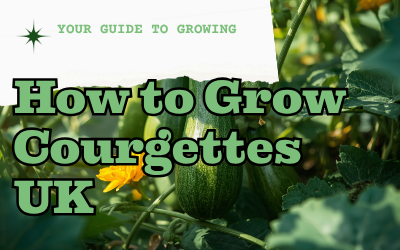
Courgette (Cucurbita pepo)

13 sources cited · Verified
The short answer
- Sow
- Early May to late June
- Plant out
- Late May to late June
- Ready in
- 55–55 days
- Site
- 6+ hours of sun, soil pH 6–6.5
- Biggest risk
- Grey mould
In the UK, courgettes are sown early May to late June, planted out late May to late June, and are ready to harvest 55–55 days after sowing.
Courgettes (Cucurbita pepo) — tender annual.
This is a frost-tender crop — it will not survive below about 6°C — so in UK conditions the growing year is built around starting it under cover and moving it out only once the risk has passed.
Core growing advice on this page is checked against named horticultural and university-extension sources — see References.
Watch: Growing Courgettes at Home
A quick SoilCommander video on growing your own courgettes (zucchini) at home in the UK.
Regional Planting Calendar
| Region | Sow | Plant out |
|---|---|---|
| Southern England | early May to late June | late May to late June |
| Midlands derived | early May to late June | early June to early July |
| Northern England derived | early May to late June | early June to mid July |
| Scotland | early May to late June | early June to mid July |
Rows marked derived are interpolated between regions our sources do state, because no source we consulted gives a figure for that region specifically. They are deliberately wider to reflect that uncertainty.
Southern England - detail & sources
RHS: plant out "after the last frosts in late May/early June". Southern England mapped to the earlier end since Met Office confirms southern/coastal frost clears earliest.
Midlands - detail & sources
DERIVED: interpolated between the Southern England and Scotland windows; no Midlands-specific source exists.
Northern England - detail & sources
DERIVED: no Northern-England-specific source; set close to but slightly ahead of the Scotland window per Met Office's general north/altitude frost-lag pattern.
Scotland - detail & sources
RHS: plant out "after the last frosts in late May/early June". Scotland mapped to the later end since Met Office confirms further-north/higher-ground frost lingers into May, sometimes June.
Soil & Growing Conditions

Quick Facts
| Factor | Value |
|---|---|
| Soil pH | 6 - 6.5 |
| Sunlight | 6-6 hours direct sun |
| Germination temp | 18C |
| Optimal growing temp | 17-30C |
| Minimum survivable temp | 6C |
| Time to harvest | 55-55 days |
| Soil texture | RHS: rich soil, with garden compost or well-rotted manure incorporated before planting. |
| Drainage | RHS: a "warm, sunny, sheltered position". |
| Lifecycle | tender annual |
| Edible parts | fruits, flowers |
At a Glance
Growth Stages
| Stage | BBCH | Notes |
|---|---|---|
| Sowing & Germination | 0 | SOWING DEPTH: 13mm (½in) deep when started indoors in small pots; 2.5cm (1in) deep when sown direct outdoors, two or three seeds per station at least 90cm (3ft) apart, thinned to the strongest seedling (RHS). TIMING: sow indoors in April or early May for an earlier, more reliable crop; sow direct outdoors from late May or early June once the soil has warmed and frost risk has passed (RHS). GERMINATION: needs 18-21C (65-70F); frost-tender at every stage and must never be sown or planted out while frost is still likely. |
| Vegetative Growth & Planting Out | 3 | SPACING: harden off indoor-raised plants and plant out, or thin direct-sown seedlings, to at least 90cm (3ft) apart -- allow roughly one square metre per plant (RHS). Water at the base rather than over the leaves to reduce the risk of grey mould and powdery mildew, and keep the soil consistently moist (RHS; Clemson: moisten soil to a depth of 6in with a uniform moisture supply). Bushy (non-trailing) cultivars are the norm in UK gardens. |
| Flowering & Pollination | 6 | Plants are monoecious, carrying separate male and female flowers on the same vine. Male flowers appear first and lack a swelling behind the petal; female flowers have a miniature fruit already visible at the base (UMD). Bees normally carry pollen from male to female flowers; in cool, dull early-summer weather insect activity drops and fruit can fail to set or rot off while small -- this resolves as the weather warms, or can be corrected by hand-pollinating: transfer pollen from a freshly opened male flower onto the stigma of a female flower with a soft brush, or press the two flowers together (RHS; UMD). Feed container-grown plants every 10-14 days with a high-potash liquid fertiliser once the first fruits start to swell; in-ground plants in reasonable soil usually need no feeding (RHS). |
| Fruit Development | 7 | Fruit swells rapidly once set. Keep watering consistent -- irregular watering and poor pollination are the main causes of fruit rotting or failing to develop. Watch the foliage for the powdery, dusty white coating of powdery mildew and fuzzy grey growth of grey mould, both encouraged by still, humid air and overhead watering (RHS); good airflow and watering at the base help prevent both. |
| Ripening & Harvest | 8 | HARVEST: cut courgettes while small, tender and full of flavour, at 10-12.5cm (4-5in) long, using a knife rather than pulling to avoid damaging the plant (RHS). Check plants daily once cropping begins and pick every couple of days -- a single healthy plant can produce three or four fruits a week in good weather; regular picking keeps more fruit coming, while a fruit left on the plant swells into a marrow and slows further production (RHS; Clemson). No storage method is given by RHS; Clemson recommends refrigerating in a plastic bag for up to a week. |
Harvest & Storage

Diseases

Pests
Nutrient Issues
Pollination
Honeybees Apis mellifera
RHS: "Pollination is usually carried out by insects", with honeybees named as the main pollinators. Poor fruit set follows "Lack of pollination due to low activity of pollinating insects, mainly honeybees, during periods of poor and cold weather"; symptoms are that "Young fruitlets are aborted and will drop off" and "The flower end of the fruit will often shrivel up and start rotting". Growing under cover limits insect access. Hand-pollinate by picking a male flower (no fruitlet at its base), removing the petals to expose the anthers, and pressing it into the centre of the female flowers -- "One male flower will pollinate several female flowers".
Courgettes, Seed to Harvest


References
-
Tier 1. Primary UK source: sowing depth/timing indoor and outdoor, spacing, male/female flowers and pollination, feeding, watering, harvest size and cutting, common problems (downy mildews, grey mould, powdery mildew, slugs/snails, poor fruit set).
-
Tier 1. US extension corroboration: harvest size/appearance, storage (refrigerate in a plastic bag up to a week).
-
Tier 1. US extension source for spacing, male vs female flower distinction, hand-pollination, days to maturity.
-
Tier 1. Host-specific: covers "cucumbers and other cucurbits"; courgette is Cucurbita pepo, a cucurbit.
-
Tier 1. Names "cucurbits (courgettes, marrows and cucumbers)" as hosts explicitly, with a photo captioned "Powdery mildew on courgette".
-
Tier 1. Cucurbit-specific: "All cucurbits are susceptible to powdery mildew"; symptom/severity and treatment detail.
-
Tier 1. Names courgettes explicitly among hosts.
-
Tier 1. Linked from the courgette grow guide's common-problems section; disease cycle and severity language.
-
Tier 1. Slugs/snails named among courgette common problems; young seedlings/transplants most vulnerable.
-
Tier 1. UK climate context for the south-to-north spring gradient used to derive regional plant-out windows for this frost-tender crop.
-
Tier 1. International agronomic ranges (temperature, pH).
-
Tier 1. Taxonomic reference and native-region context.
-
Tier 2. EPPO Code property (P3031) = "CUUPE".
13 independent sources are cited for this crop. Where they disagree - soil pH is the clearest case - every figure is preserved rather than averaged into false precision.
Frequently Asked Questions
When should I plant courgettes out in the UK?
In southern England, from late May. In northern England and Scotland, wait until early June. Treat these as a guide rather than a fixed date — the governing rule is to plant out only once frost risk has passed and temperatures are reliably warm enough.
When do I sow courgettes?
Sow early May to late June, at around 18°C for germination.
How long do courgettes take to grow?
Typically 55–55 days, depending on cultivar and growing conditions.
What soil pH do courgettes need?
A pH of about 6–6.5. That span reflects genuine variation between the authorities we cite rather than a single agreed figure — the References section lists each source's exact range.
What problems affect courgettes?
Our data links 4 diseases and 2 pests to this crop. See the sections above for each one and how to manage it.
Plan next season before the problems start
Most of the advice on this page comes down to timing and spacing — sowing at the right moment, rotating beds, and giving plants enough airflow. The UK Garden Planner lays your plot out month by month so those decisions are already made before the season starts.
Get the UK Garden Planner →Instant PDF download · Written for UK growing conditions
Last verified 2026-08-06
Tools That Help With This Crop
Use these links when the guide moves from reading into sowing, planting, watering, and keeping the crop healthy.
Plan the next step
Use the printable UK Vegetable Garden Planner to turn this guide into sowing dates, bed layouts, and weekly garden tasks.