
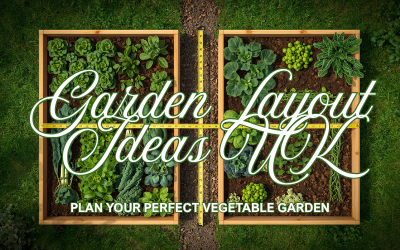
A well-planned garden layout is the cornerstone of successful vegetable growing in the UK climate — and the single biggest lever for higher yields from the same space. The right layout maximises sunlight, improves air circulation, keeps paths usable through wet UK months, and makes crop rotation and succession sowing possible without redesigning every spring.
A good layout is not a pretty sketch first. It is a decision system: where the sun lands, where paths stay dry, which crop families move next year, and which beds need fast follow-on sowing after harvest. This guide walks through every key layout decision for UK growing conditions — small gardens, raised beds, beginner plans, companion planting and rotation — and how to connect them into a repeatable seasonal plan.
For the complete planning system — templates, calendars and worked examples — start at the UK Vegetable Garden Planning Hub.
Quick Facts: Vegetable Garden Layout UK
- Path width needed
- 45–60cm minimum for wet-ground access
- Bed width maximum
- 1.2m (reachable from both sides without stepping on soil)
- Essential layout rule
- Separate crop families — never let the same family repeat a bed
- Best planning tool
- Printable bed layout + rotation worksheet
Watch: Connect Layout, Rotation and Harvest Records
The planner workflow connects layout, sowing dates, crop rotation and harvest notes in one system — instead of keeping them as separate scraps of paper. This video shows how the pieces fit together for a UK vegetable garden.
Small Vegetable Garden Layout Ideas
Small gardens demand creative thinking to maximise productivity, but don't let limited space discourage you. Vertical growing, intensive planting techniques, and careful crop selection make it entirely possible to harvest abundant vegetables from the most compact spaces.
Key strategies for small vegetable gardens include:
- Vertical structures like trellises, obelisks, and wall-mounted planters for climbing crops such as beans, peas, and cucumbers — making use of the sky, not just the ground
- Square foot gardening methods that divide beds into grid sections for intensive planting
- Succession planting to ensure continuous harvests from the same space throughout the season
- Compact varieties — dwarf or patio varieties bred specifically for container and small-space growing
- Interplanting fast-growing crops like radishes and lettuce between slower-maturing vegetables
- Edge planting — use borders for herbs and salad leaves harvested regularly without disturbing main crops
Container gardening extends your growing area to patios, balconies, and windowsills. Large pots and grow bags work brilliantly for tomatoes, peppers, courgettes, and salad crops — just ensure adequate drainage and quality compost. Narrow beds (60–90cm wide) allow you to reach the centre from either side without stepping on the soil, preventing compaction and maintaining healthy soil structure.
Raised Bed Vegetable Garden Layout
Raised beds are a game-changer for UK gardens, offering superior drainage during our notoriously wet winters and springs while warming up faster for earlier planting. They provide excellent control over soil quality and make gardening more accessible by reducing bending and kneeling.
Benefits of raised bed layouts include:
- Improved drainage — preventing waterlogging in the heavy clay soils common across much of the UK
- Better soil warming in spring — extending the growing season by several valuable weeks
- Easier soil amendment — maintain optimal pH and nutrients without fighting poor native soil
- Reduced soil compaction — you never walk on the growing area
- Clear organisation — making crop rotation and companion planting straightforward
- Accessibility — ideal for gardeners with mobility challenges or anyone who prefers working at a comfortable height
Standard raised bed dimensions: 1.2m wide by 2.4–3.6m long, with height from 20–45cm — taller beds suit root vegetables and gardeners who prefer not to bend. Leave 60–90cm pathways between beds for comfortable access with wheelbarrows. Fill with a rich mixture of quality topsoil, compost, and well-rotted manure.
Consider orientation carefully: north-south beds get even sunlight through the day, while east-west beds can shade heat-sensitive crops in summer. In the UK, maximising southern exposure is generally your best bet.

Build the Layout from Decisions, Not Wishful Spacing
For most UK gardens, the best layout is a simple bed plan with permanent paths, clear crop-family zones and space for succession sowing. The RHS recommends permanent paths that allow access in all weather — particularly important in the wet UK season, when stepping onto soil compacts it and damages drainage.
| Decision | Why it matters for UK gardens | Helpful guide |
|---|---|---|
| Bed size and paths | Prevents soil compaction and keeps harvesting practical in wet UK months. | This guide — see raised beds above |
| Crop family zones | Makes crop rotation possible without rebuilding the plan each spring. | Crop Rotation Planner UK |
| Succession spaces | Turns a single harvest into repeated sowings of salads, radish, beetroot and spring onions. | What to plant in July UK |
| Planner records | Shows which beds gave a useful harvest and which were wasted by late sowing. | Vegetable garden layout PDF |
Use Crop Rotation as the Skeleton
RHS crop rotation guidance groups vegetables by families so pests, diseases and nutrient pressure do not build up in one place. In a SoilCommander layout, the bed label is as important as the crop name: mark one zone for potatoes, one for brassicas, one for legumes, one for roots and one flexible salad or quick-crop area. A simple four-year rotation moves each group to a different bed annually — this prevents soil-borne diseases and nutrient depletion far more reliably than any amount of feeding can correct afterwards.
Once family zones are set, connect each to the right timing resource. If potatoes are part of the plan, link the layout to when to plant potatoes UK. If summer crops are the focus, connect the bed map to when to plant sweetcorn in the UK and when to plant squash in the UK. The garden planning templates guide shows which template pages to use for recording each family's position across multiple seasons.

Beginner Vegetable Garden Layout
Starting your first vegetable garden can feel overwhelming, but a simple, manageable layout sets you up for success. Begin with easy-to-grow crops and a straightforward design you can expand as your confidence grows.
A beginner-friendly layout includes:
- Three to four beds or designated growing areas, each 1–1.5m wide
- One bed for salad crops (lettuce, rocket, spinach, radishes) — quick wins that keep you motivated
- One bed for root vegetables (carrots, beetroot, turnips)
- One bed for legumes (peas, beans) — they improve soil nitrogen naturally
- One bed for brassicas (cabbage, kale, broccoli) or fruiting crops (tomatoes, courgettes)
Reliable, beginner-friendly vegetables that tolerate UK weather: salad leaves and rocket (harvests within weeks), radishes (3–4 weeks to maturity), courgettes (abundant with minimal care), runner beans (climb vertically, crop heavily), potatoes (break up new ground and suppress weeds), and kale and chard (withstand cold and crop through winter).
Keep your first layout simple with clear paths, good access to water, and proximity to the house so you check on plants regularly. It's far better to grow a few crops well than many crops poorly. Document what you plant and when — that record becomes invaluable for planning future seasons.
Companion Planting Layout
Companion planting strategically places vegetables together to enhance growth, deter pests, and maximise space — working with nature to create a balanced, productive ecosystem.
Successful companion combinations include:
- Tomatoes with basil — basil repels aphids and whitefly while enhancing flavour
- Carrots with onions — onions deter carrot fly, one of the most troublesome UK pests
- Beans with sweetcorn and squash (the "three sisters") — beans fix nitrogen, corn provides support, squash shades soil
- Lettuce with radishes — radishes mature quickly while lettuce fills in
- Cabbage with thyme, sage, and rosemary — strong scents confuse cabbage white butterflies
- Courgettes with nasturtiums — nasturtiums draw aphids away as a sacrificial crop
Avoid these combinations: onions with beans or peas (onions inhibit legume growth), tomatoes with brassicas (they compete for nutrients and share pests), and fennel with most vegetables (it inhibits growth in many plants).
Design flowering herbs around bed edges — calendula, borage, and phacelia attract hoverflies, lacewings, and parasitic wasps that control aphids naturally. Tall plants like climbing beans can also shade lettuce and spinach through warm spells, preventing bolting. See the full Companion Planting Guide UK for pairings crop by crop.
Turn the Layout into a Monthly Action List
A bed plan without dates still leaves you guessing. UK weather dictates when crops can be sown outdoors, started under cover, or transplanted — and your layout should accommodate succession planting and seasonal transitions seamlessly.
- Spring (March–May): Early sowings of peas, broad beans, onion sets, and hardy salads. Prepare beds for tender crops to plant after the last frosts — see what to plant in March UK
- Summer (June–August): The main planting season. Fill gaps left by harvested early crops with succession sowings — see June and August
- Autumn (September–November): Plant garlic, onion sets, and broad beans for overwintering; sow winter salads under cover — see what to plant in September UK
- Winter (December–February): Harvest kale, leeks, and Brussels sprouts. Plan next year's layout and order seeds early
Use the UK Vegetable Planting Calendar to coordinate your layout with optimal sowing windows for every crop. Succession planting keeps beds productive year-round: as you harvest early potatoes in June, replant with French beans or courgettes; when spring lettuce finishes, follow with autumn brassicas. Reserve sections for long-term residents like Brussels sprouts (planted spring, harvested through winter) and balance them with quick-turnover crops sown multiple times per season. For growing at reduced scale with the same logic, the small vegetable garden planner adapts bed-and-family thinking to containers.
Connecting Layout to Soil and Wildlife
A good layout also considers soil health and the garden's ecology. The soil improvement tools guide explains how soil structure affects drainage and compaction — both of which change how a layout performs over time. For gardens where pollinators matter alongside production, the wildlife-friendly vegetable garden guide shows how to integrate flowering strips and habitat edges without reducing productive space. In urban spaces, the urban vegetable growing guide adapts these principles for patios, balconies and courtyards.

Match Crops to Their Place in the Layout
Each crop has spacing, sunlight, and soil requirements that influence where it fits. Tomatoes and peppers demand maximum sun; lettuce and spinach tolerate partial shade; root vegetables need deep, loose soil; squash needs room to spread. Start with timing for the big three — tomatoes (warm, sheltered positions or greenhouse), carrots (deep, stone-free soil, ideal in raised beds), and potatoes (need space but break up new ground) — then go crop by crop:
Tomatoes · Carrots · Potatoes · Onions · Garlic · Lettuce · Spinach · Cucumbers · Peas · Beans
Recommended Gardening Tools
The right tools make implementing and maintaining your layout significantly easier. Hand tools — trowels, hand forks, hoes, and pruning shears — handle planting, weeding, and harvesting (stainless steel resists rust in our damp climate). Watering equipment maintains consistent moisture through dry spells, especially for containers. Soil and plant care supplies — compost, fertilisers, mulches — keep bed fertility and structure working year after year. For raised bed construction you'll want basic carpentry tools, timber, and cardboard or fabric to suppress weeds beneath — plus a wheelbarrow with a pneumatic tyre for moving compost and harvests.
In-Depth Planning Guides
These articles go deeper on the planning and layout principles above — crop-specific detail, worked examples and seasonal strategies for UK conditions:
- High-Yield Vegetable Garden Layout UK — block planting spacing, intensive bed design and succession windows
- Crop Rotation Planner UK — four-year rotation groups, soil recovery and pest-break planning
- Garden Planning Templates UK — what to record each season and how it improves next year's results
- Small Vegetable Garden Planner UK — compact layouts, container and raised bed combinations
- Climate-Smart Vegetable Growing UK — layout and timing choices for unpredictable UK weather
Map Your Beds and Plan Your Rotation
Get the UK Vegetable Garden Planner PDF to print your bed layout, plan crop family zones, track succession sowings and record harvest results — all in one system designed for UK growing conditions.
Get the Planner PDF →Frequently Asked Questions
How wide should vegetable beds and paths be in the UK?
Beds should be no wider than 1.2m so you can reach the centre from both sides without stepping on the soil, and paths should be at least 45–60cm wide — surfaced or wood-chipped — so they stay usable through wet UK winters.
What is the best vegetable garden layout for a beginner in the UK?
Three to four beds of 1–1.5m width, organised by crop family: one for salads, one for roots, one for legumes, and one for brassicas or fruiting crops. This structure makes rotation automatic and keeps the workload manageable in year one.
Do I need to rotate crops in a small garden?
Yes — even in small gardens, repeating the same crop family in the same soil builds up pests, disease and nutrient depletion. Label beds by family rather than crop name and move each family one bed along every year.
Should raised beds run north-south or east-west?
North-south orientation gives the most even sunlight across the bed through the day. East-west beds can be useful where you deliberately want taller crops to shade heat-sensitive salads, but for most UK gardens maximising southern exposure matters more.
Plan month by month with the UK vegetable planting calendar · Avoid the classic errors in vegetable garden layout mistakes · Explore all UK vegetable growing guides
Last updated 19 July 2026
Build The Plan Into Your Garden
Planning guides are easier to act on when you pair them with bed records, soil preparation, and the right basic tools.
Plan the next step
Use the printable UK Vegetable Garden Planner to turn this guide into sowing dates, bed layouts, and weekly garden tasks.