
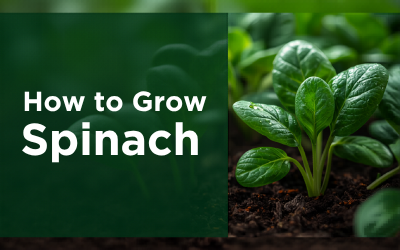
Spinach (Spinacia oleracea)

8 sources cited · Verified
The short answer
- Plant
- Early March to late May
- Ready in
- 30–60 days
- Site
- 4+ hours of sun, soil pH 6–7
- Biggest risk
- Spinach downy mildew
In the UK, spinach go in the ground early March to late May, and are ready to harvest 30–60 days after planting.
Spinach (Spinacia oleracea) — annual.
Core growing advice on this page is checked against named horticultural and university-extension sources — see References.
At a Glance
Quick Facts
| Factor | Value |
|---|---|
| Soil pH | 6 - 7 |
| Sunlight | 4-4 hours direct sun |
| Germination temp | 20C |
| Optimal growing temp | 13-20C |
| Minimum survivable temp | -7C |
| Time to harvest | 30-60 days |
| Soil texture | Clemson: "fertile sandy loam high in organic matter". RHS: "fertile, moisture-retentive soil", prepared by forking in plenty of garden compost or well-rotted manure. |
| Drainage | Clemson: raised beds approximately 3 inches high are good because the improved drainage may reduce the incidence of damping-off. RHS treats the soil as moisture-retentive. |
| Lifecycle | annual |
| Edible parts | leaves |
Regional Planting Calendar
| Region | Sow |
|---|---|
| Southern England | early March to late May |
| Midlands derived | early March to late May |
| Northern England derived | mid March to late May |
| Scotland derived | early April to mid May |
Rows marked derived are interpolated between regions our sources do state, because no source we consulted gives a figure for that region specifically. They are deliberately wider to reflect that uncertainty.
Southern England - detail & sources
Primary spring window: RHS advises sowing spinach March–May. Sow again in late summer (late Aug–Sep) for autumn and overwintering crops (choose hardy/overwintering cultivars and cloche-protect). Avoid Jun–Jul sowings — long days and heat trigger bolting. Southern England's mild springs allow the earliest starts under cloches from mid-to-late February.
Midlands - detail & sources
Derived from the Southern England spring window on the Met Office south→north temperature gradient — cooler soils reach spinach's germination range about a week later. Also sow late Aug–early Sep for autumn crops; avoid Jun–Jul (bolting). Spinach itself is frost-hardy.
Northern England - detail & sources
Derived on the Met Office south→north gradient — spring sowings begin roughly two weeks later than Southern England as soils warm to germination temperature; sow autumn crops by late August. Spinach is frost-hardy, so overwintering under cloches is reliable.
Scotland - detail & sources
Derived on the Met Office south→north gradient — cool springs push the main sowing start to about April, with a shorter spring window; sow autumn/overwintering crops by mid-to-late August under cover. Spinach's frost-hardiness suits Scottish winters with protection.
Soil & Growing Conditions

Growth Stages
| Stage | BBCH | Notes |
|---|---|---|
| Sowing & Germination | 0 | Direct-sow where plants are to grow — spinach dislikes root disturbance and is not usually transplanted. RHS: sow seed thinly along a drill 2.5cm (1in) deep, in rows 20cm (8in) apart, thinning seedlings to 7.5cm (3in) apart and final plants to about 15cm (6in); UMD gives the same 7.5–15cm (3–6in) spacing. Spinach germinates best in cool soil — Clemson: optimum germination near 21°C (70°F), inhibited above ~29°C (85°F); UMD: sow once soil reaches about 7°C (45°F). Early-spring and late-summer sowings therefore succeed where midsummer sowings fail. In Southern England the first sowings can be made under cloches from late winter. Sow little and often (every few weeks) for a steady supply. |
| Leaf Growth (rosette) | 3 | Plants form a fast-growing rosette of leaves. Spinach is a thirsty, hungry crop: keep the soil consistently moist (RHS: water in warm, dry weather — drought stress is a key bolting trigger) and feed for leafy growth on poorer soils. Mulch to conserve moisture and suppress weeds. Full sun suits spring and autumn crops, but light afternoon shade helps summer sowings stand longer before bolting. Protect seedlings and young leaves from slugs and snails, watch for aphids (also virus vectors), and for pale blotch mines caused by beet/spinach leaf miner — pick off and destroy mined leaves. |
| Harvest | 4 | Harvest from about 30 days after sowing for baby leaves and around 60 days for mature leaves. Clemson: pick dark-green, tender leaves 7.5–15cm (3–6in) long. Cut outer leaves as cut-and-come-again, or lift whole plants; harvest promptly and regularly, because leaves toughen and the plant is quick to bolt in warm weather. Store picked leaves bagged in the refrigerator and use fresh. |
| Bolting & Flowering | 6 | As days lengthen and temperatures climb — or after drought or transplant stress — spinach bolts, sending up a flower stem and turning the leaves bitter, which ends the useful harvest. Spinach is dioecious (separate male and female plants) and wind-pollinated. Manage bolting by sowing bolt-resistant cultivars, sowing in the cool of spring and autumn, keeping plants well watered, and harvesting quickly; remove bolted plants unless saving seed. |
| Seed Development | 7 | If left to flower, female plants set clusters of dry seed along the stems. Leave a few healthy, true-to-type plants of an open-pollinated variety to save seed; let the seed ripen and dry on the plant before collecting. Seed saved near other flowering spinach may cross, as pollen is wind-borne. |
| Senescence & Self-seeding | 9 | After seeding, plants yellow and die back. Spinach can self-sow from dropped seed. Clear spent plants to the compost, and rotate crops — avoid following spinach with beetroot or chard, which share pests (beet leaf miner) and soil-borne problems (downy mildew, damping-off). |
Harvest & Storage

Diseases
Pests
Spinach, Seed to Harvest


References
-
Tier 1. Primary UK source for sowing depth (2.5cm) and spacing (20cm rows, thin 7.5cm, final 15cm), sowing months (spring + late summer/autumn), watering, bolting triggers, harvest timing (baby ~1 month, mature ~2 months), and slugs/snails and downy mildew.
-
Tier 1. US extension corroboration for germination temperature (optimum ~21C/70F, inhibited above ~29C/85F), spacing, harvest leaf size (7.5-15cm / 3-6in), seedling damping-off and aphids.
-
Tier 1. US extension source for spacing/thinning, high nutrient requirement, sowing once soil reaches 7C/45F, days to maturity (28-55), and leafminer control with row covers.
-
Tier 1. Host-specific source: Peronospora farinosa f. sp. spinaciae infects only spinach; the major spinach disease.
-
Tier 1. RHS source confirming CMV also attacks spinach (with lettuce and celery).
-
Tier 1. Management of seedling damping-off (Rhizoctonia/Pythium) relevant to spring spinach sowings.
-
Tier 1. UK climate context for the south-to-north spring gradient used to derive regional sowing windows.
-
Tier 1. International agronomic ranges (temperature, pH).
8 independent sources are cited for this crop. Where they disagree - soil pH is the clearest case - every figure is preserved rather than averaged into false precision.
Frequently Asked Questions
When should I sow spinach in the UK?
In southern England, from early March. In northern England and Scotland, wait until mid March. Treat these as a guide rather than a fixed date — the governing rule is to sow only once frost risk has passed and temperatures are reliably warm enough.
When do I sow spinach?
Sow early March to late May, at around 20°C for germination.
How long do spinach take to grow?
Typically 30–60 days, depending on cultivar and growing conditions.
What soil pH do spinach need?
A pH of about 6–7. That span reflects genuine variation between the authorities we cite rather than a single agreed figure — the References section lists each source's exact range.
What problems affect spinach?
Our data links 3 diseases and 4 pests to this crop. See the sections above for each one and how to manage it.
Plan next season before the problems start
Most of the advice on this page comes down to timing and spacing — sowing at the right moment, rotating beds, and giving plants enough airflow. The UK Garden Planner lays your plot out month by month so those decisions are already made before the season starts.
Get the UK Garden Planner →Instant PDF download · Written for UK growing conditions
Last verified 2026-08-06
Spinach sown in August stands through autumn and often overwinters for an early spring picking — see the full August sowing list for UK gardens.
Tools That Help With This Crop
Use these links when the guide moves from reading into sowing, planting, watering, and keeping the crop healthy.
Plan the next step
Use the printable UK Vegetable Garden Planner to turn this guide into sowing dates, bed layouts, and weekly garden tasks.